

As the era of decarbonization brings focus to the domestic hot water production of buildings, heat pumps have become the leading technology utilized to achieve this goal with great success.
Fossil fuels can be removed from systems and high COPs can be achieved, even as the weather gets colder throughout the winter months. However, as successful as these products have been, the application of these new heat pumps has led to new design challenges that must be factored into the process.
1 HP, 1 Tank, Return to Primary 9-17-25
On top of budgets, electrical requirements and space constraints, the new heat pump systems also respond to demand much differently than the existing gas and electric resistant systems. This has led plumbing engineers to design new piping strategies to keep COPs high and the tanks satisfied.Introduce, single pass piping, which maintains high delta Ts across the heat pump, maximizing the efficiency of the refrigeration system, while also allowing for the water to be stored in stratified tanks.

However, the implementation in real world situations has led to new challenges. In some cases, recirculated domestic hot water is returned to a swing tank which tempers the water back up to a set point to recover the heat loss from pumping this water through the building and back to the storage. In other cases, this return water is piped back to the storage tanks in what is called “return to primary”. At a high level, we would hope that the swing tank would temper a small amount of water and the heat pump would handle the majority of our heating demand.
In some cases, return water GPM is higher than expected and the primary storage is held in the tanks longer than expected. Here, what ends up happening is that the return to the heat pump water temperature becomes higher than expected, and thus starts our problem.
The majority of single-pass heat pumps installed utilize single stage compressors, constant flow pumps, and very simple control logic. This means the heat pump can not ramp up or down and the “lift” is near constant. In single-pass domestic hot water units, the required lift is typically 45-90 degrees where this is set at the unit controller and the fan control can allow for only a slight variation in lift.
What this means is that if our target temperature is 140F° and our required lift is 90F° . The heat pump will simply not turn on if the entering water is above 50F°, plus the deadband input. Now that the heat pump is not operational, the swing tank is handling all the load and all of our energy goals will not be met. In turn, this results in higher energy bills and the swing tank struggling to keep up with demand.
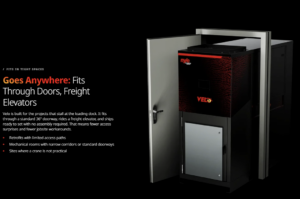
Our solution? By implementing a variable speed reciprocating R-513A compressor into the new Nyle E180 Velo system we can now have “variable lift” in our domestic hot water systems. This allows the heat pump to stay on even when the return water rises and completely avoids the scenarios where the swing tank is running more than expected. While local code requires the use of swing tanks, this new system allows us to completely remove the need for a swing tank and the heat pump would handle all of our load without worrying about these scenarios that have been plaguing the industry’s initial projects. This new system will allow plumbing contractors and engineers to design projects with greater confidence as the Nyle Velo is flexible enough to handle the fringe or unexpected situations.
To learn more, contact our team of HVACR experts today at [email protected]